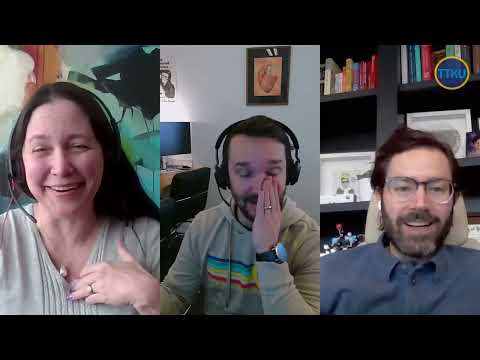
The Future of Brain Stimulation
This week on Trying to Keep Up, Allison Komiyama and Michael Nilo are joined by former FDA neuroscientist, biochemical engineer, and regulatory consultant Laura Rice, PhD for a fascinating conversation about neurotechnology, brain stimulation, AI-enabled devices, and what it's really like to navigate innovation in neuroscience.
Laura shares her unique perspective from reviewing neurological and psychiatric devices at FDA, her unexpected departure during the 2025 workforce reductions, and her transition into consulting across neuroscience, software as a medical device (SaMD), diagnostics, and AI. The discussion explores some of the most exciting recent FDA authorizations in neurotechnology, including new non-invasive treatments for PTSD and depression that could expand access to care while reducing treatment burden for patients.
The group also dives into the science behind electrical stimulation therapies, the evolution of neurotechnology from electroconvulsive therapy (ECT) to modern neuromodulation platforms, and how FDA is evaluating increasingly sophisticated neuroscience products.
Plus: coin-dispensing ATMs, PTSD devices, and an unexpectedly thoughtful discussion about resilience, public service, and innovation.
Key Topics Covered:
Laura Rice's journey from FDA reviewer to consultant
FDA workforce reductions and their impact on reviewers
Neurovalens Modius Spero for PTSD symptoms
Neurolief Proliv Rx for depression
Non-invasive brain stimulation technologies
The science behind neuromodulation and neuroplasticity
PTSD, anxiety, sleep, and depression treatments
AI-enabled neurological diagnostics
Neuropacs and Parkinsonian syndrome diagnostics
Human factors guidance updates
Real-world evidence initiatives
eSTAR updates and submission strategies
Patient engagement in medical device development
The future of neuroscience and neurotechnology
Links